REVIEW · HONOLULU
Pearl Harbor with USS Arizona and Hawaiian Kingdom History Tour
Book on Viator →Operated by Go Tours Hawaii · Bookable on Viator
Pearl Harbor hits harder with context. This tour pairs the USS Arizona Memorial with downtown stops tied to the Hawaiian Kingdom, so you get the 1941 story and the long arc that led to it. Add air-conditioned Waikiki transport and fully narrated commentary, and it’s a tidy way to cover a lot without feeling like you’re sprinting.
I love that the price covers real costs up front—USS Arizona Memorial admission and entrance fees are included, so you’re not doing last-minute calculations. I also like the mix of stops: you’re not only looking at war sites, you’re also seeing places connected to Hawaiian royalty, government, and missionary-era change.
My main caution: Pearl Harbor timing can be strict, and a few downtown stops may feel more like short orientation stops than a full internal tour depending on the day’s flow and access. If you’re counting on every room and museum clockwork, keep expectations flexible.
In This Review
- Key things to know before you go
- A 5-hour plan that connects Pearl Harbor to the Kingdom
- Waikiki pickup and the Pearl Harbor meeting rule (read this part)
- USS Arizona Memorial: the moving start you can’t fake
- Pearl Harbor Visitor Center and the Road to War Exhibit
- Iolani Palace and Kamehameha Statue: Hawaiian Kingdom context downtown
- Iolani Palace (the only U.S. royal palace)
- King Kamehameha Statue (a symbol you’ll recognize instantly)
- Hawaii State Capitol and the Mission Houses: how the story changes
- Hawaii State Capitol: modern government with cultural design cues
- Mission Houses Museum: missionary-era daily life
- Kawaiahao Church: coral-block roots and koa interiors
- The guide is often the difference-maker
- Timing, weather, and what to pack for Pearl Harbor rules
- Price and value: $57 with the hard-to-buy USS Arizona ticket
- Who this Pearl Harbor and Hawaiian Kingdom tour fits best
- Should you book this tour?
- FAQ
- How long is the tour?
- Where does pickup happen?
- Is the USS Arizona Memorial ticket included?
- Are entrance fees included?
- What language is the tour in?
- Do I meet at Pearl Harbor directly?
- How large is the group?
- Are bags allowed at the memorial?
- What if I need to cancel?
Key things to know before you go
- USS Arizona ticket included so you’re not scrambling for entry
- Navy shuttle boat experience after the orientation film
- Road to War Exhibit gives you the “why” behind the attack
- Iolani Palace + Kamehameha Statue add Hawaiian Kingdom context
- Small group size (max 24) feels less like a cattle-car day
- Pack light for Pearl Harbor rules; bags can be restricted inside memorial areas
A 5-hour plan that connects Pearl Harbor to the Kingdom
This is a classic “one-day hit list,” but it works because the stops talk to each other. You start with the part everyone remembers: December 7, 1941 at Pearl Harbor. Then the tour shifts gears downtown, where you’ll see symbols of Hawaiian sovereignty and the political institutions that came after.
It’s also a realistic duration. Around five hours usually means you’ll have time for the key sights without burning your whole day on logistics. Since pickup is from Waikiki with round-trip air-conditioned transport, you’re not stitching together multiple rides or waiting on unpredictable buses.
If you’re visiting Oahu for the first time, this format is strong. Pearl Harbor is the emotional anchor, but the Hawaiian Kingdom stops help you understand what was at stake beyond the attack itself.
Other USS Arizona Memorial tours we've reviewed at Pearl Harbor & Oahu

Waikiki pickup and the Pearl Harbor meeting rule (read this part)
You’ll be picked up in Waikiki, not at Pearl Harbor. That’s not a small detail—it’s one of the strict rules of the area. The operator policy is clear: you meet in Waikiki, then ride the tour bus to participate. So if you’re tempted to arrive on your own and “just find the group,” don’t.
Pickup options are spread along Waikiki (Ala Moana Hotel, Modern Honolulu Hotel, Hilton Hawaiian Village area, Ka La‘i Waikiki Beach, Ross Dress for Less, Hyatt Regency Waikiki Beach Resort, and the Twin Fin Hotel). The tour also lists two pickup schedules—morning and a later one—so your exact start time depends on your route.
Why this matters for your day:
- You avoid the headache of ticket handling at the park.
- You reduce the chance of missing a departure window.
- You can focus on the sights instead of racing across town.
Tip: keep your phone battery charged and have your mobile ticket ready. When Pearl Harbor runs on tight schedules, having your info available fast helps.
USS Arizona Memorial: the moving start you can’t fake
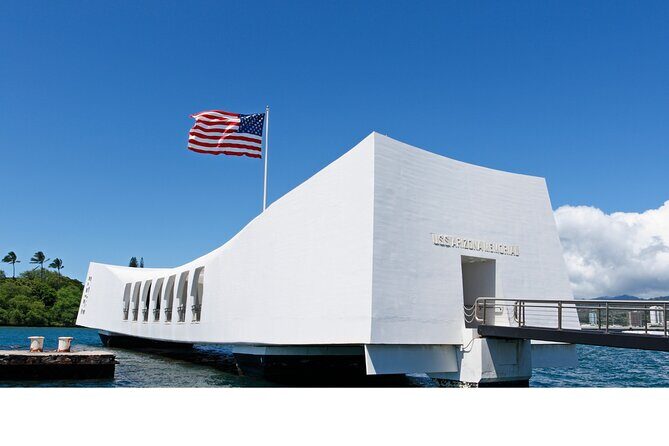
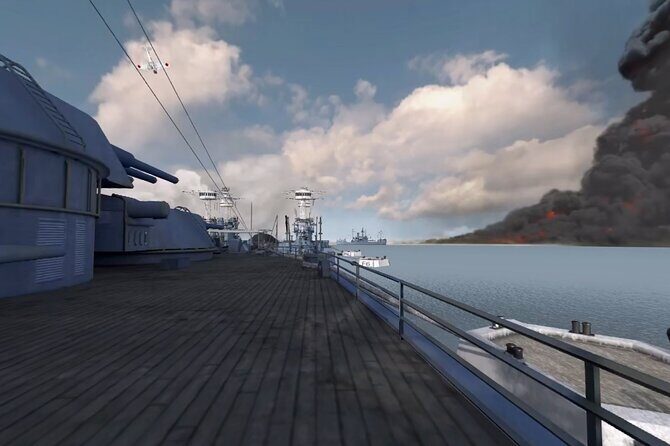
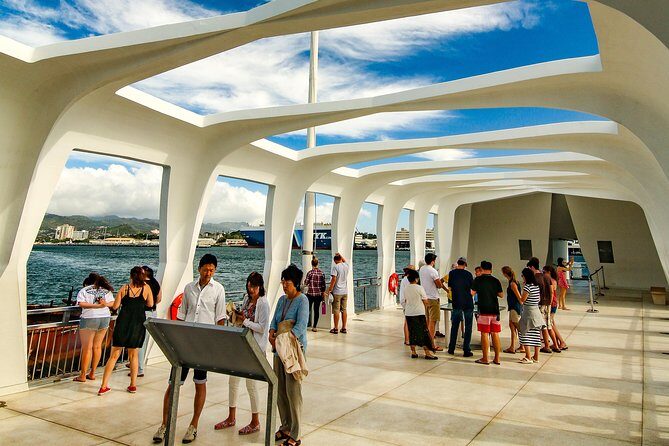
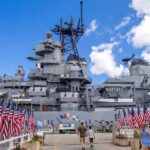
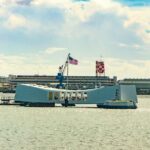
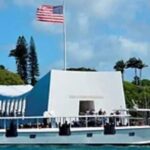
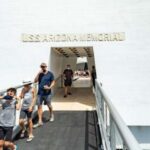
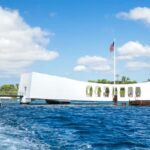
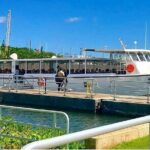
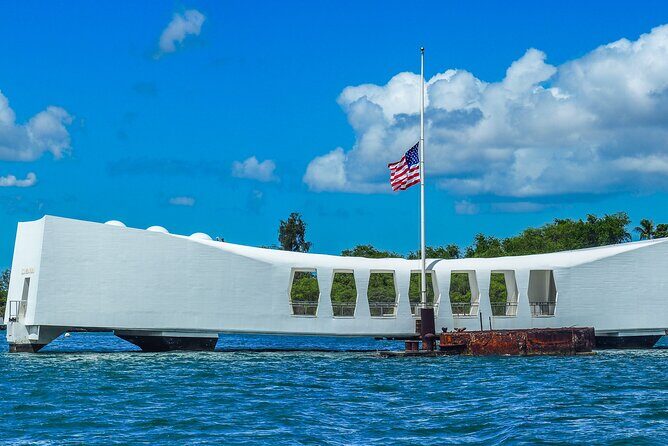
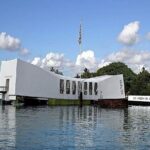
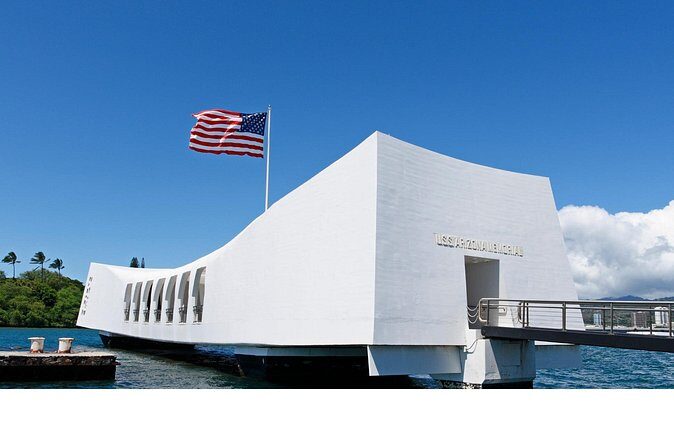
The USS Arizona Memorial stop is the heart of the day. Your experience begins with an orientation film that sets the stage for what happened on December 7. After that, you board a Navy-operated vessel for the short ride to the memorial.
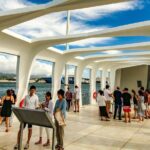
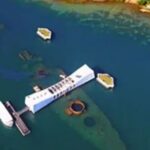
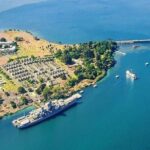
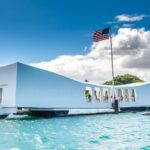
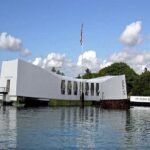
The memorial itself is built directly over the submerged battleship USS Arizona. That physical closeness is what makes this stop so intense. You’re not reading history in a gallery—you’re standing in a place tied to loss and survival, with the site’s layout doing part of the storytelling for you.
Time-wise, the stop includes about 1 hour 30 minutes. In practice, that’s plenty to watch the film, get onto the boat, spend time at the memorial, and still have a moment to decompress afterward.
One thing to keep in mind: Pearl Harbor can be busy, and access can feel tightly managed. A small delay here can ripple into the rest of the day. If you want a calm experience, treat the USS Arizona Memorial as the priority and don’t plan to rush out to other things right after.
Pearl Harbor Visitor Center and the Road to War Exhibit
Right after the memorial, you move to the Pearl Harbor Historic Sites Visitor Center. This is where the story gains structure. You get interactive displays and multimedia content that explain the attack’s buildup and aftermath, including how events on December 7 reshaped Hawaii’s path and hit world history.
The standout named feature here is the Road to War Exhibit. It’s built around artifacts, photographs, and personal accounts—so you’re not just learning dates. You’re seeing how people documented what they saw and what they carried forward afterward.
This is also a smart stop for groups of mixed interests. If someone in your party needs context before it clicks emotionally, the Visitor Center does that. If you already know the basics, it helps you fill in the “how did we get here?” gaps.
The Visitor Center stop runs about 1 hour, including time to move through exhibits at an un-rushed pace. If you’re hoping to read every placard, you might want to focus on key sections and let the interactive parts do the rest.
Iolani Palace and Kamehameha Statue: Hawaiian Kingdom context downtown
After Pearl Harbor, the tour shifts to Honolulu’s downtown, and that’s where the “history beyond 1941” part becomes real.
Other WWII heroes & history tours at Pearl Harbor & Oahu

Iolani Palace (the only U.S. royal palace)
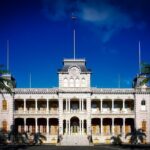
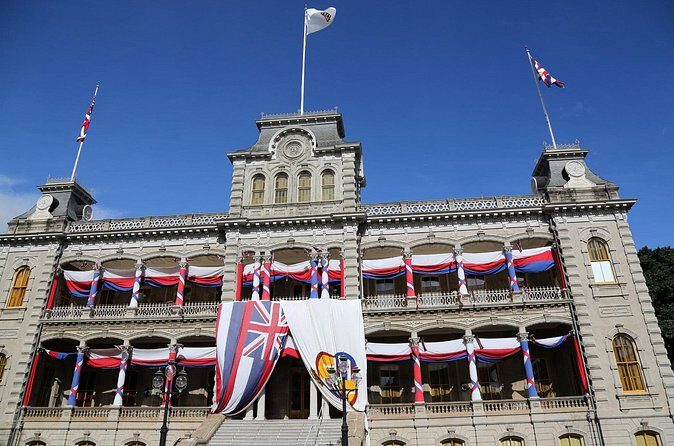
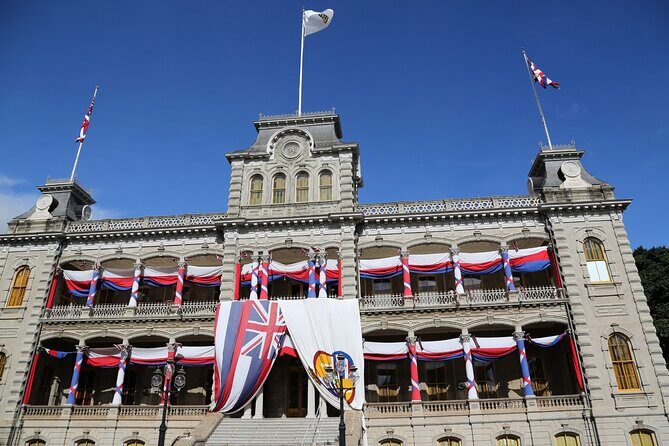
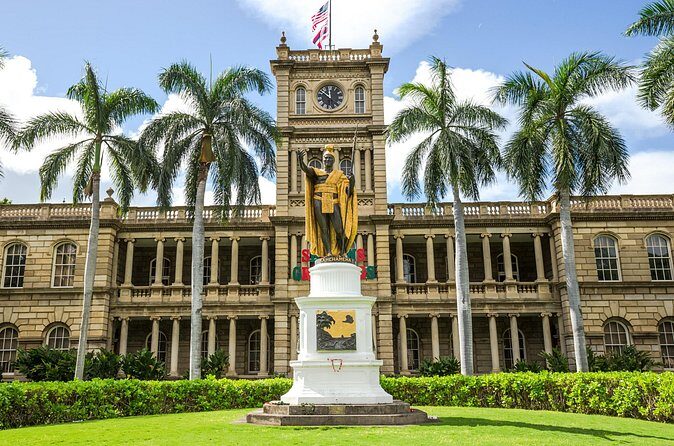
Iolani Palace is the big Kingdom-era anchor. It’s described as the only royal palace in the United States, built in 1882 during the reign of King David Kalakaua. It served as the official residence of Hawaiian monarchs until the overthrow of the Hawaiian Kingdom in 1893.
Architecturally, the palace mixes European and Hawaiian elements, and it’s set up today as a museum. Even if your time is limited, the exterior and setting are enough to make the historical framing land: this wasn’t some ancient abstract past—it was political life, conducted here.
One practical note from real-world experiences: some days a stop may feel more like a brief orientation walk than a fully guided interior experience. So if palace rooms are your top priority, plan to treat this as a scheduled stop where your access can depend on timing.
King Kamehameha Statue (a symbol you’ll recognize instantly)
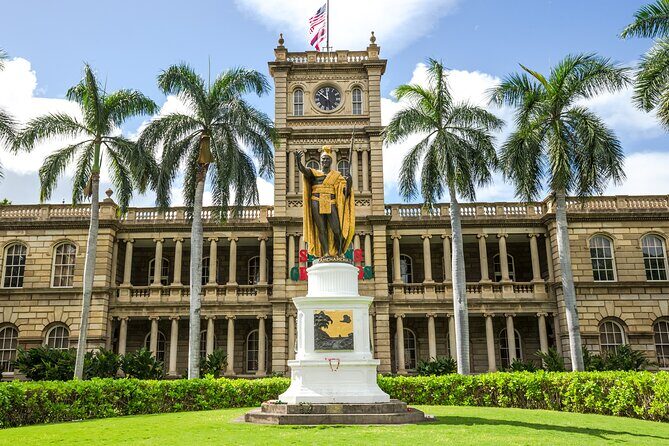
Next up is the monumental King Kamehameha Statue, depicting King Kamehameha I. It’s a huge bronze sculpture commissioned in 1878 and sculpted by Thomas Ridgeway Gould. The statue’s size alone makes it feel like a landmark, not a quick photo stop.
This is a useful pairing with Iolani Palace. Together, they help you understand how Hawaiian leadership is commemorated—through a visible, city-centered symbol and through the palace that once embodied governance.
Hawaii State Capitol and the Mission Houses: how the story changes
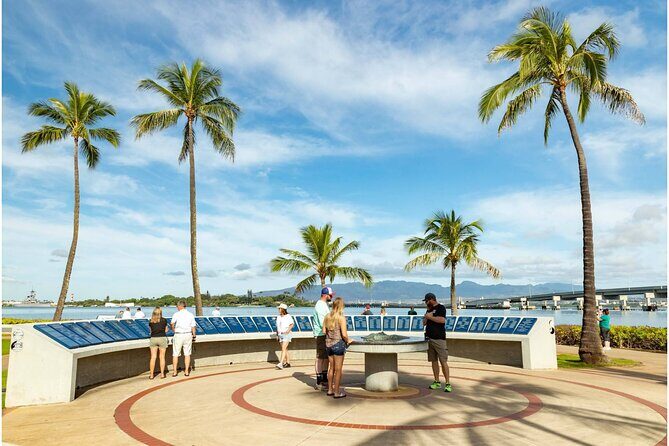
The downtown portion keeps broadening the lens, and that’s what makes the tour feel more than a one-note memorial day.
Hawaii State Capitol: modern government with cultural design cues
The Hawaii State Capitol is a striking modernist building completed in 1969, designed by John Carl Warnecke. The description emphasizes its distinctive volcano-inspired form, with two legislative chambers shaped like lava flows and a central rotunda tied to a hurricane-like theme. There’s also an open-air courtyard with native Hawaiian plants and a reflecting pool.
Even if you don’t go inside for every room, the building’s design helps you see the shift from royal governance to the modern political structure of the state.
Mission Houses Museum: missionary-era daily life
The Mission Houses Museum is a quieter, human-scale contrast. It’s a complex of three restored homes: the Frame House (1821), Chamberlain House (1831), and the Printing Office (1841). Here, you get a look at early 19th-century Protestant missionary life and the way Western influence interacted with Hawaiian society.
This stop can be especially valuable because it doesn’t only focus on conflict. It helps you understand cultural change through daily living—furnishings, documents, and artifacts—so you can see how the Kingdom era got pulled into wider global currents.
Kawaiahao Church: coral-block roots and koa interiors
Lastly, there’s Kawaiahao Church, established in 1820. Its coral block construction and tall steeple make it a distinctive presence in the skyline. Inside, the mention of koa wood furnishings and a calm worship atmosphere adds a sense of spiritual continuity amid the political changes around it.
Together, State Capitol, Mission Houses, and Kawaiahao Church give you a “three-era” feel: royal, mission-era change, and modern governance.
The guide is often the difference-maker
This tour lives or dies on narration quality, and the reviews provide plenty of evidence that the guide can make it feel personal.
Names that came up include Kanoe, Bob, Rockie, Robert, Lani, Janie, Canoe, and Rockne. In several accounts, the standout theme is how the guide connects dots—Pearl Harbor’s tragedy, Hawaii’s political evolution, and what you’re actually seeing in each place.
A few specific examples from feedback:
- Some guides were praised for knowing names quickly and keeping the group feeling like individuals.
- Others were described as friendly and helpful, with clear explanations of what’s allowed at the memorial.
- A common positive thread: guides who can explain the island story in a way you can actually hold onto.
Also, watch for pacing. One review complained about a guide who didn’t stay with the group at Pearl Harbor after parking, which is exactly the kind of small operational miss that can frustrate people when the schedule is tight. If you’re the type who needs constant direction, arrive early at pickup and don’t hesitate to ask the guide for a clear meeting point time.
Timing, weather, and what to pack for Pearl Harbor rules
Pearl Harbor is a place where rules are not optional. Even if your tour includes tickets, you may still face restrictions on what you can carry into certain areas.
The data you’re given doesn’t list a full packing rulebook, but one important detail shows up in real experiences: guests were told they couldn’t take bags inside the memorial area and had to use storage facilities instead. The practical takeaway is simple: bring what you need, keep it light, and treat storage as part of the experience—not an emergency.
Also, the tour needs good weather. If conditions are poor, you can be offered another date or a refund. That’s not unusual for Hawaii, but it’s still worth planning around.
Physical comfort matters too. The tour is listed for travelers with moderate physical fitness. You’ll be walking through outdoor stops and dealing with the practical pace of city-to-memorial transit. If mobility is a concern, confirm your comfort level before booking.
Price and value: $57 with the hard-to-buy USS Arizona ticket
At $57 per person, the big value is what’s included. You get:
- Waikiki hotel pickup and drop-off
- Air-conditioned vehicle
- A fully narrated tour
- USS Arizona Memorial ticket
- Entrance fees covered for the stops included
That matters because USS Arizona access isn’t something you casually “wing” on a busy day. When you compare the value, you’re mainly paying for certainty: transport, entry planning, and guided context.
What’s not covered:
- Money for souvenirs and memorial gifts
- Optional gratuities
Is it worth it? For many first-timers, yes—especially if you’d otherwise be trying to combine Pearl Harbor logistics with downtown history sites. For people who already know they want only the USS Arizona Memorial and nothing else, you might find cheaper options elsewhere. But this tour’s strength is the pairing: memorial + monarchy + modern Honolulu.
Who this Pearl Harbor and Hawaiian Kingdom tour fits best
This is a great match if you:
- Want a guided Pearl Harbor experience that includes the Visitor Center, not just a quick photo stop.
- Like history that connects events across time, not only the day of the attack.
- Want an easy day from Waikiki with air-conditioned transportation and a structured route.
It may not be ideal if you:
- Need a long, fully guided interior experience at every building.
- Are sensitive to schedule pressure around memorial access.
- Pack heavy bags and don’t want to think about storage rules.
If your group includes teens or adults who need both emotion and context, this tour format tends to click. The memorial does the emotional work; the downtown stops help you place it in Hawaii’s political timeline.
Should you book this tour?
I’d book it if you want one organized day that does three things well: gets you into the USS Arizona Memorial, gives you context at the Visitor Center, and adds meaningful Hawaiian Kingdom-era stops like Iolani Palace and the Kamehameha Statue. The included ticketing and entrance fees make the day feel financially straightforward.
I’d hesitate only if you’re very strict about spending lots of time inside every museum or if you’re the type who panics when a guide briefly disappears to handle logistics. If you plan to show up early, keep your bag small, and treat Pearl Harbor timing as the controlling factor, this can be a strong value day in Honolulu.
FAQ
How long is the tour?
The tour runs about 5 hours total (approx.), including travel time between stops.
Where does pickup happen?
Pickup is offered from Waikiki locations, with several specific meeting points listed like Ala Moana Hotel, Hilton Hawaiian Village area, and multiple hotels along Waikiki.
Is the USS Arizona Memorial ticket included?
Yes. The USS Arizona Memorial ticket is included in the tour price.
Are entrance fees included?
Yes. Entrance fees are included, so you do not need to budget extra for admission to the included stops.
What language is the tour in?
The tour is offered in English and is fully narrated.
Do I meet at Pearl Harbor directly?
No. Due to strict Pearl Harbor regulations, you must meet in Waikiki and ride the tour bus to participate.
How large is the group?
The tour has a maximum of 24 travelers.
Are bags allowed at the memorial?
Pearl Harbor has strict rules. In one recent experience, guests were told they could not bring bags inside the memorial area and had to store them in nearby storage facilities.
What if I need to cancel?
You can cancel for a full refund up to 24 hours before the experience start time. If you cancel less than 24 hours before, the paid amount is not refunded.
![Honolulu: Pearl Harbor, USS Arizona Memorial [Early Access] - Pearl Harbor Visitors Center: Your Quick Orientation Before the Memorial](https://3.discoverpearlharbor.com/wp-content/uploads/honolulu-pearl-harbor-uss-arizona-memorial-early-access.jpg)