REVIEW · HONOLULU
Battleships of WWII at Pearl Harbor from Big Island
Book on Viator →Operated by Aloha Sunshine Tours · Bookable on Viator
Pearl Harbor feels close up here. This day trip pairs Navy boat time with stepping into the USS Arizona Memorial, plus a guided run through what led to December 7, 1941. The trade-off is you are in motion most of the day, with strict bag rules inside Pearl Harbor.
Two things I really liked: the guide’s stop-by-stop context (from the film at the visitor center to the deck tour at Missouri) and the way the USS Arizona wreckage and remembrance wall are handled with quiet, built-in reflection. One possible drawback: it’s an all-day schedule (about 7 to 9 hours) and meals are on your own, so plan ahead for comfort and snacks.
Price-wise, $459.99 per person can look steep until you see what’s wrapped in: round-trip flights from Kona and Hilo to Honolulu, transfers, and major attraction admissions handled for you. For people who want a smooth, information-forward day without hunting tickets or timing, it’s a strong value. Just know this is not the full museum deep-dive.
In This Review
- Key things that make this Pearl Harbor day trip work
- From the Big Island to Pearl Harbor without the headache
- What you really get at Pearl Harbor Visitor Center
- The USS Arizona Memorial boat ride: calm, close, real
- Inside the USS Arizona Memorial: wreckage, “tears,” and the names
- Walking the Battleship Missouri deck, where surrender was signed
- USS Oklahoma Memorial on Ford Island: the quieter counterpoint
- Honolulu history between war sites and royal landmarks
- Time, walking, meals, and what to wear
- Bag rules and what they mean for your day
- Price of $459.99: how to judge the value
- Who should book this, and who should skip it
- Should you book Battleships of WWII at Pearl Harbor from Big Island?
Key things that make this Pearl Harbor day trip work
- Round-trip flight plus transfers: You start on the Big Island, fly to Honolulu, and get moved around without managing logistics all day.
- Navy boat ride to USS Arizona: The short crossing builds the right sense of place before you step onto the memorial.
- The Arizona’s wreckage view and names: You get time to look down at the remains and read the memorial wall with the 1,177 names.
- Battleship Missouri deck tour tied to WWII’s ending: You walk the ship where the Instrument of Surrender was signed in 1945.
- Ford Island USS Oklahoma Memorial: A different angle on the same attack, with a solemn, land-based focus.
- Honolulu add-ons beyond Pearl Harbor: Punchbowl (National Memorial Cemetery), Iolani Palace, and historic church sights make the day feel bigger than one port.
From the Big Island to Pearl Harbor without the headache
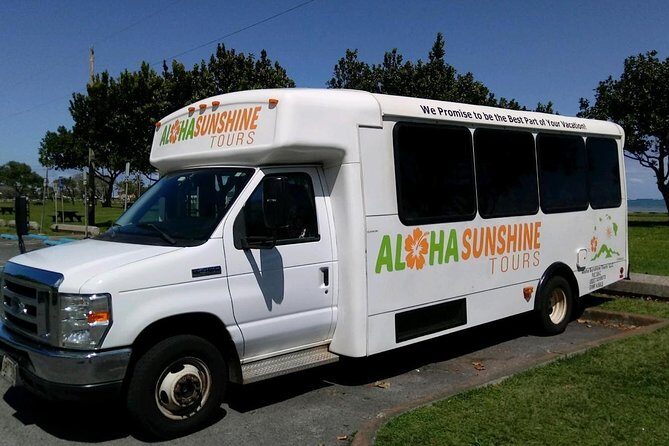
This is built as a “show up and go” day. You’re picked up on Oʻahu at the airport depending on whether you flew Southwest Airlines or Hawaiian Airlines, then you’re handled through the Pearl Harbor area and on to Honolulu highlights. Starting at 7:00am keeps the day efficient, but you should treat it like a full outing, not a casual half-day.
The group size is capped at 24, which matters. You’ll still wait sometimes, but it’s not the giant crowd feel you get on big bus tours. Also, it’s in English and uses expert narration for the history and royal-site context.
If you want to control every detail yourself, you might prefer building your own flights, admissions, and transport. But if you’d rather spend your energy listening and taking photos (when allowed), the package-style setup is the point.
Other WWII heroes & history tours at Pearl Harbor & Oahu

What you really get at Pearl Harbor Visitor Center
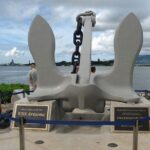
You start at the Pearl Harbor Historic Sites Visitor Center, with about 2 hours there. This part matters because it gives you the setup for everything that follows. You can walk the exhibits that explain the events leading up to the attack on December 7, 1941, then you watch a 23-minute documentary that frames the attack, its impact, and why the USS Arizona Memorial matters.
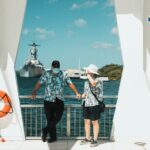
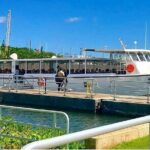
After the exhibits and film, you board a U.S. Navy-operated boat for the short harbor ride out to the memorial. Even though the ride is only about 10 minutes, it’s not just transportation. It helps your brain shift from “museum mode” into “place mode,” the feeling you want before you reach the memorial itself.
One practical note: this tour does not include the Pearl Harbor museums. If you’re the type who wants extra galleries and deep museum time, you’d need a different option (the Complete Pearl Harbor Experience type).
The USS Arizona Memorial boat ride: calm, close, real
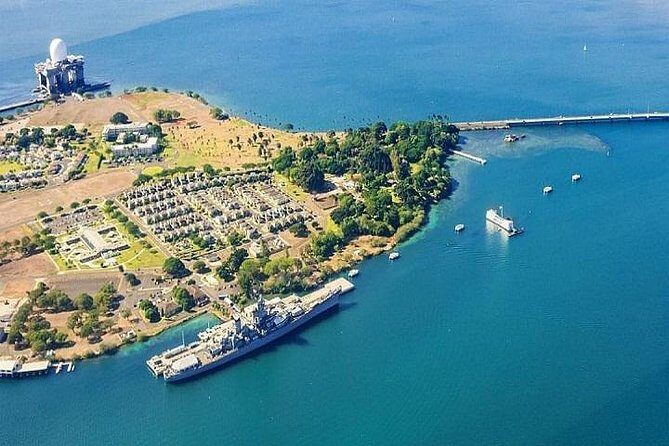
The short Navy boat crossing is one of those moments you’ll remember because it’s quiet and visual. You’re not rushing through a set of doors; you’re moving across the harbor while you take in views of military installations in the area.
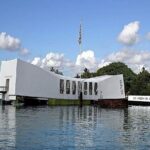
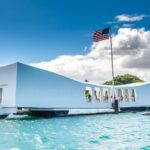
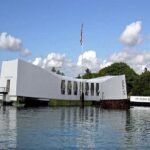
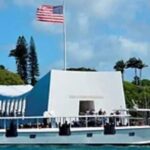
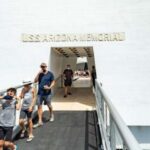
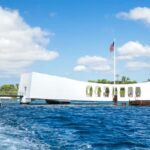
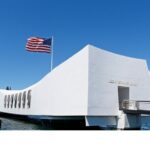
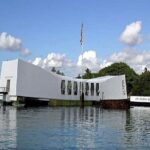
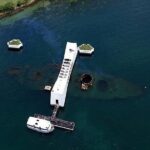
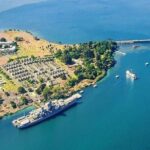
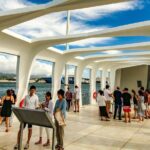
Then you step into the USS Arizona Memorial. The memorial is an open-air structure that spans the remains of the sunken battleship. That design change is emotional on purpose: you’re not staring at a model. You’re physically within sight and perspective of the ship’s outline below the water.
This is also where the tour’s rules and atmosphere start to matter. On the memorial itself, visitors are encouraged to maintain respectful silence, so you may find talking is kept to a whisper, or not much at all. It feels fitting, and it helps the memorial land.
Inside the USS Arizona Memorial: wreckage, “tears,” and the names
You get about 1 hour at the USS Arizona Memorial. The experience is built around three core things:
First, you can look down into the water to see parts of the sunken battleship. The ship’s outline is visible just below the surface, and you can sometimes see oil droplets referred to as The Tears of the Arizona rising to the water.
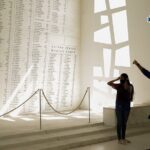
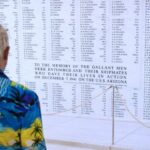
Second, the layout gives you time to absorb the Remembrance Wall at the far end of the memorial. The wall is inscribed with the names of 1,177 crew members who lost their lives aboard the USS Arizona. Reading those names slowly is the whole point here. You don’t need to “speed through” to get the message.
Third, the memorial’s open-air feel keeps it grounded. You’re not in a dark theater, and you’re not just looking at artifacts behind glass. The solemn atmosphere is intentional.
If you’re coming during busy periods, you still won’t feel like you’re in a theme park line. The memorial experience is structured for reflection, not quick consumption.
Walking the Battleship Missouri deck, where surrender was signed
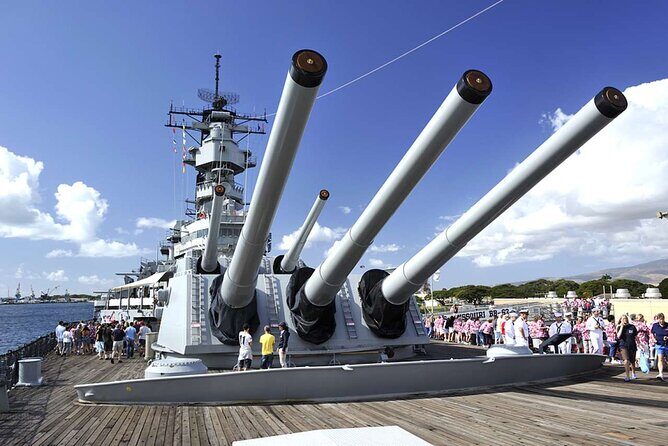
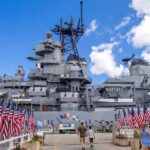
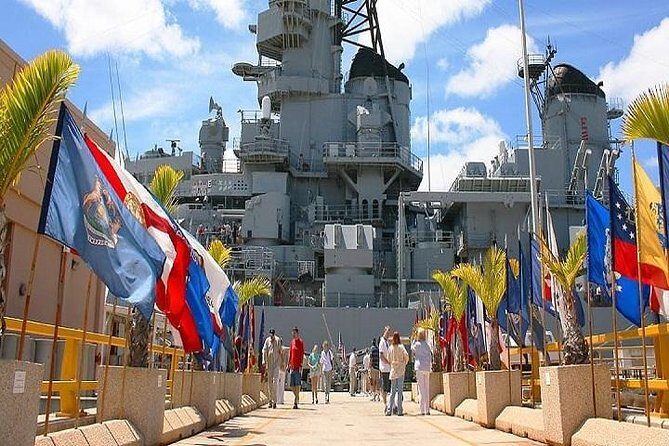
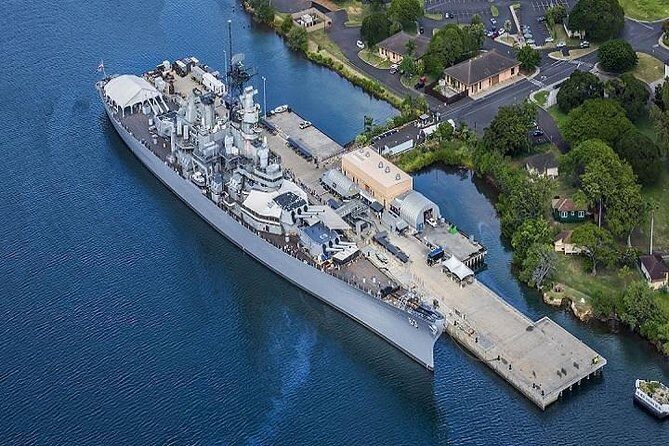
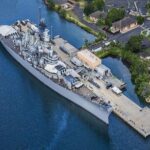
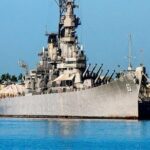
Next is the Battleship Missouri Memorial, with about 2 hours. This stop is more than a history lesson. It’s a deck-level walk, and the scale hits you fast.
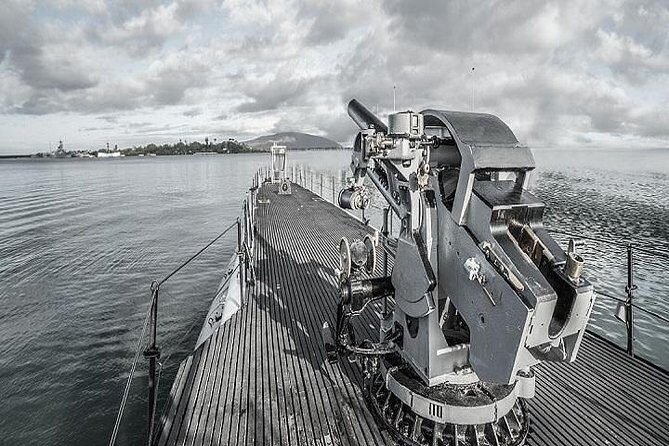
You’ll be walking the last U.S. battleship ever built, where the Instrument of Surrender was signed in 1945. The Missouri deck tour includes spaces tied to key WWII leadership and daily operations, and you’ll also see features such as officer and crew quarters and artillery.
There’s also a moment many people remember: you’ll view a kamikaze aircraft crash site connected to the ship’s wartime experience. That’s heavy material, but it’s presented as part of the ship’s story, not as shock value.
The narration connects it to bigger arcs—MacArthur and Chester Nimitz are referenced in relation to what you’re standing on. If you like history that stays tied to real locations, Missouri is where the tour really feels “on the deck,” not just in a room.
Other Pearl Harbor tours from Kona & Big Island
USS Oklahoma Memorial on Ford Island: the quieter counterpoint
After Missouri, you move to the USS Oklahoma Memorial, the only land-based memorial at Pearl Harbor. This stop honors more than 400 servicemen who lost their lives aboard the ship during the flurry of attacks on December 7, 1941, with the tour emphasizing that Oklahoma was second only to Arizona in casualties.
You’ll have about 2 hours here, which surprised me in a good way. People expect the Arizona portion to take all the emotional focus, but Oklahoma gives you that broader sense of the day’s losses across multiple ships and crew fates.
Because it’s land-based, you may feel it a touch differently than the memorial over the wreck. There’s still a solemn, reflective tone—just without the same water-level view element.
Honolulu history between war sites and royal landmarks
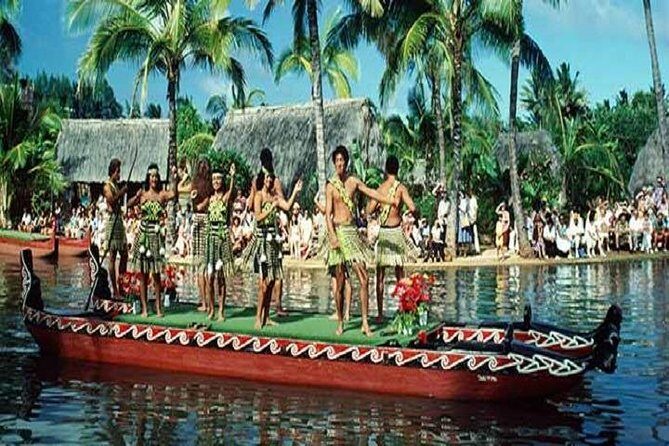
The Pearl Harbor portion is only one part of the day. You also get Downtown Honolulu narration for about 45 minutes, with a mix of historic context, cultural heritage, and modern city life, all guided.
Then you move to the National Memorial Cemetery of the Pacific, often called Punchbowl because it sits on an extinct volcanic crater. The grounds are kept very carefully, with rows of white headstones set against lush greenery. The crater setting also gives you wide views over the city, including downtown Honolulu, Diamond Head, and the coastline.
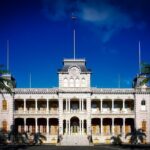
After that, you visit Iolani Palace, the only royal palace in the United States. The time at the palace is short (about 15 minutes), but the focus is clear: you learn about Hawaii’s monarchy and the stories of King Kalākaua and Queen Liliʻuokalani, the last reigning monarchs.
From the palace area, you’ll also view the King Kamehameha Statue, located in front of Aliʻiōlani Hale, where the Hawaii State Supreme Court is housed. Your guide also “talks story” about the original government building of the Hawaiian Kingdom.
Finally, you’ll visit Kawaiahaʻo Church, sometimes described as the Westminster Abbey of the Pacific. Your guide explains its significance and its role in Hawaii’s religious history. Even with short stop times, those elements help you feel that this day isn’t only about war. It’s also about how the islands’ identity survived, changed, and carries meaning.
Time, walking, meals, and what to wear
Expect a long day: 7 to 9 hours total, starting at 7:00am. The tour includes multiple stops and walking, and you should assume some uneven ground and time in outdoor areas. Comfortable shoes are not optional here.
The tour also notes it’s not recommended if you can’t walk about four city blocks. That’s a useful benchmark. If you’re unsure, think about your ability to do that distance without breaks, while moving through memorial grounds and ship-deck routes.
Meals are at your own expense. The good news is there are a few on-site dining options at the visitor center and near Battleship Missouri, including food trucks, snack stands, or cafes. Still, I’d bring a plan for timing. If you’re hungry at the wrong moment, you’ll wait.
Also be aware of clothing and site rules. No swimwear is allowed, and there is no smoking on the visitor center grounds or at the memorial. Those rules are straightforward but easy to forget when you’re used to casual vacation packing.
Bag rules and what they mean for your day
Pearl Harbor sites have strict security and limits on what you can bring. Purses and bags are not allowed inside Pearl Harbor. The tour indicates you can store bags for $7.00 each, and clear plastic bags are allowed if their contents are readily visible (football-style clarity).
If you’re traveling with a camera bag, a small daypack, or anything bulkier, plan to store it and travel light through the security-sensitive parts. Consider what you’ll want during the memorial stops: water, a light layer, and any essentials you can carry in what’s allowed.
This is one of those rules that can make or break the day’s comfort. If you show up with the wrong bag, you waste time at the start. Keep it simple.
Price of $459.99: how to judge the value
$459.99 per person is the kind of price that makes you pause—until you look at what’s included. This tour has round-trip airfare from Kona and Hilo to Honolulu, plus transfers, an air-conditioned vehicle, attraction admissions provided by your guide, and the Arizona memorial boat admission.
It also includes the shuttle service from the Pearl Harbor Visitor Center to the USS Missouri Memorial, and admission to USS Battleship Missouri. On top of that, you get expert narration for the Pearl Harbor history and for Hawaii’s royal family and kingdom story.
Meals are not included, so factor in lunch. But compared to booking flights and Pearl Harbor access separately, the “handled for you” approach can reduce both cost friction and stress.
If you’re traveling solo or as a couple and you’re comfortable assembling everything yourself, you might find a cheaper DIY approach. But for many people on the Big Island, paying for organized movement and bundled admissions is worth it—especially with an early start and multiple sites across Oʻahu.
Who should book this, and who should skip it
This works especially well if you want a guided, structured Pearl Harbor day with access to the Arizona memorial and Missouri battleship deck, plus a meaningful slice of Honolulu’s historic sites.
It’s also a good fit if you don’t want to wrestle with airport timing, multiple ticket purchases, and figuring out transport between sites. The max group size of 24 is another plus for people who prefer not to feel lost in a crowd.
I’d think twice if:
- you need long museum time inside Pearl Harbor (this tour focuses on memorials and ships, not the museums)
- you have limited mobility and can’t comfortably handle about four city blocks of walking
- you’re hoping for a flexible schedule and slow pace (this is designed as an organized run)
- you don’t want to deal with bag restrictions and security storage
Should you book Battleships of WWII at Pearl Harbor from Big Island?
If you want a well-paced day that pairs WWII memorials with Honolulu’s royal and cultural landmarks, I think it’s a strong choice. The biggest reason is value: flights from Kona and Hilo, key admissions, and guided narration are built into one price, so you’re not trying to coordinate half a vacation day on your own.
Book it if you’re ready for an early start, comfy walking shoes, and a reflective tone at USS Arizona. Skip it if you want museum time as the centerpiece or if walking that four-block baseline won’t work for you. And if weather is unstable, keep in mind that sites can close due to stormy conditions, so flexibility helps.